Why the Aarti Is Better Seen From a Boat
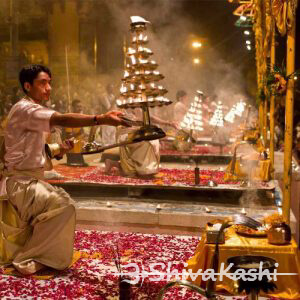
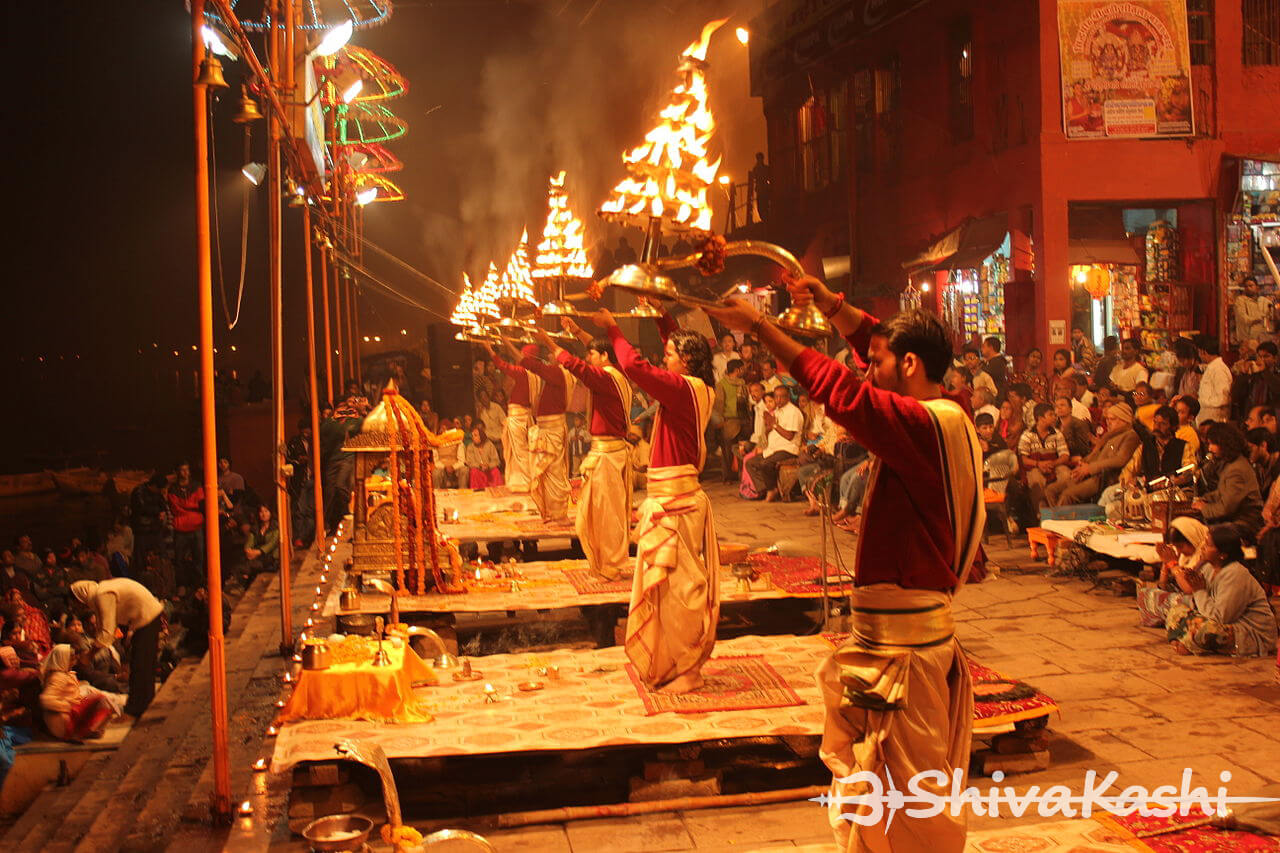
The Ganga Aarti at Dashashwamedh has been performed every evening for decades. Seven priests on raised platforms move heavy multi-tiered brass lamps in synchronised arcs, to conch shells, bells and drums, for roughly forty-five minutes. It is the most-photographed ritual in India.
The problem is the geometry. The platforms face the river, not the steps. Standing on the ghat you are behind and above the priests, looking at their backs through several thousand other people. The ceremony is performed towards the water — so the water is where it is meant to be seen from.
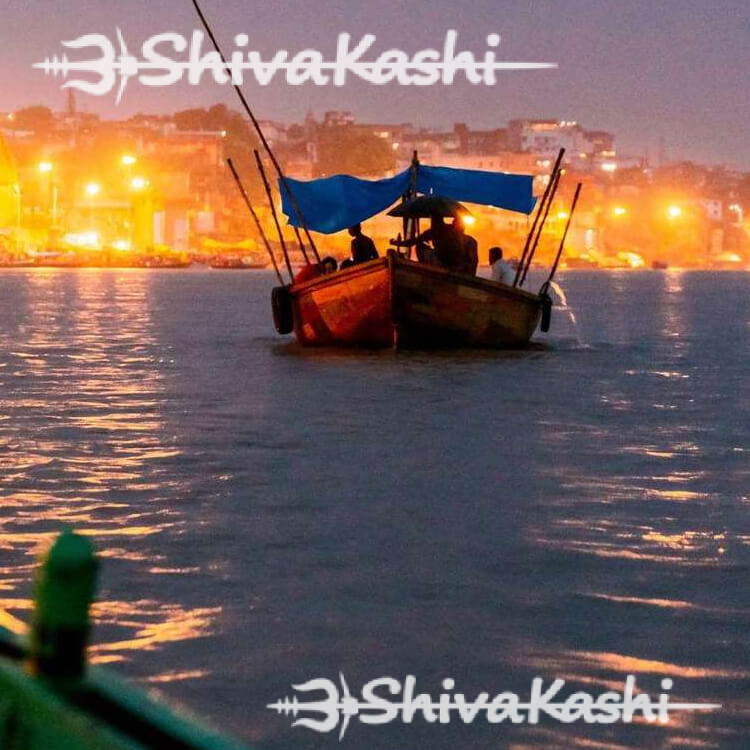
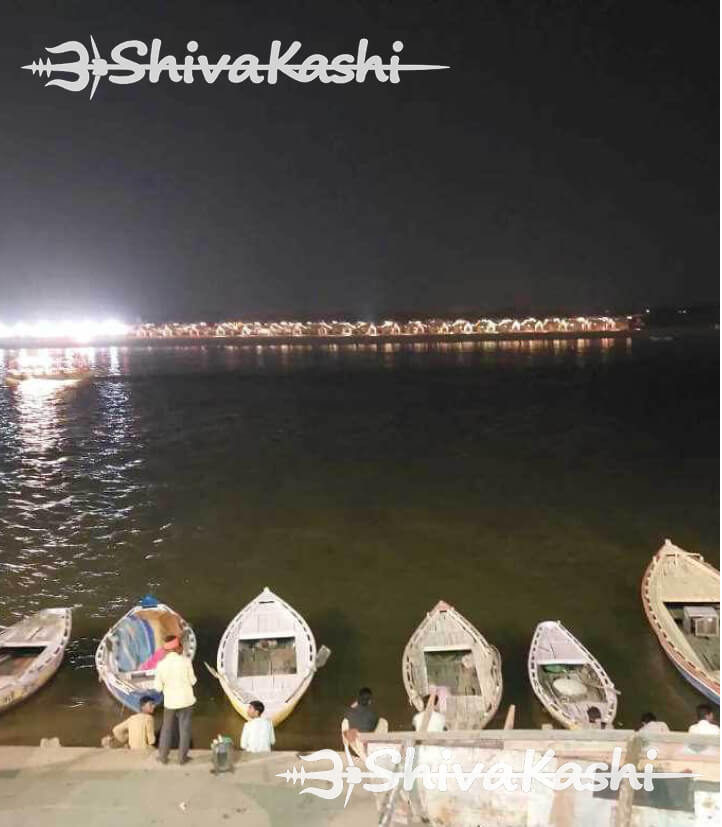
A private boat holds position directly opposite the platforms. You are level with the lamps, facing the priests, with the lit ghat rising behind them. Boats that arrive early get the front line; boats that arrive at 6:15 raft up behind four rows of others. Which row you are in is decided by when your boat leaves the ghat, and that is the single thing a booking buys you.
- 🔥Level With the LampsPositioned opposite the platform, facing the priests — not behind them.
- ⏰Out Before the FleetWe push off around 5:30 PM to take the front line before the shared boats arrive.
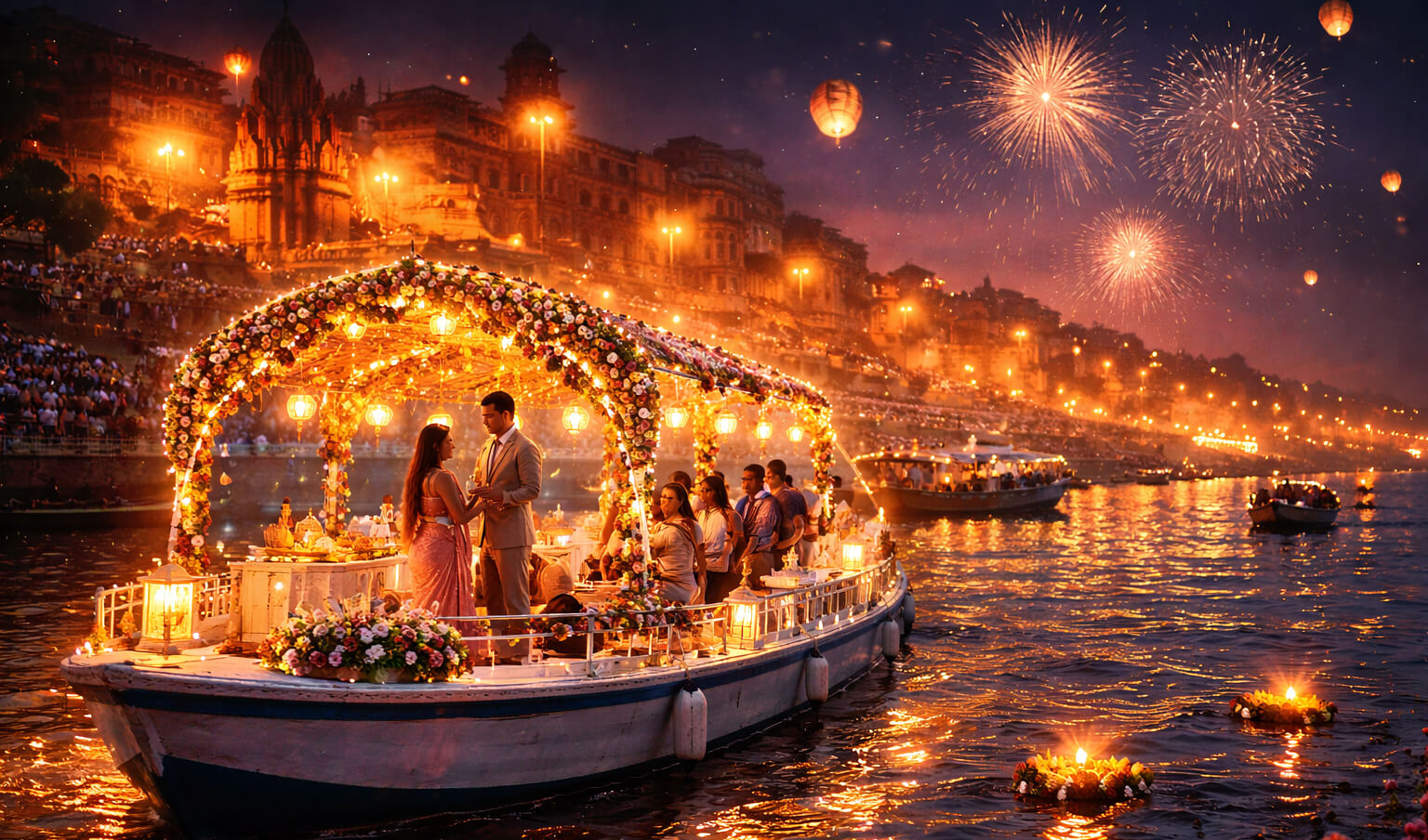
- 🪔Float Your Own DiyaLamps and flowers provided on board, floated during the ceremony.
- 🏛️Lamp-Lit Ghat CruiseAfter the aarti, a slow return past the lit façades — Manikarnika glowing, Kedar floodlit.
- 🎧You Can Actually Hear ItRowing and light motor boats stay quiet during the ceremony. A diesel motor at idle drowns the bells.
- 👨👩👧Comfortable for All AgesSeated, shaded from the crowd, with no standing for forty-five minutes in a crush.